
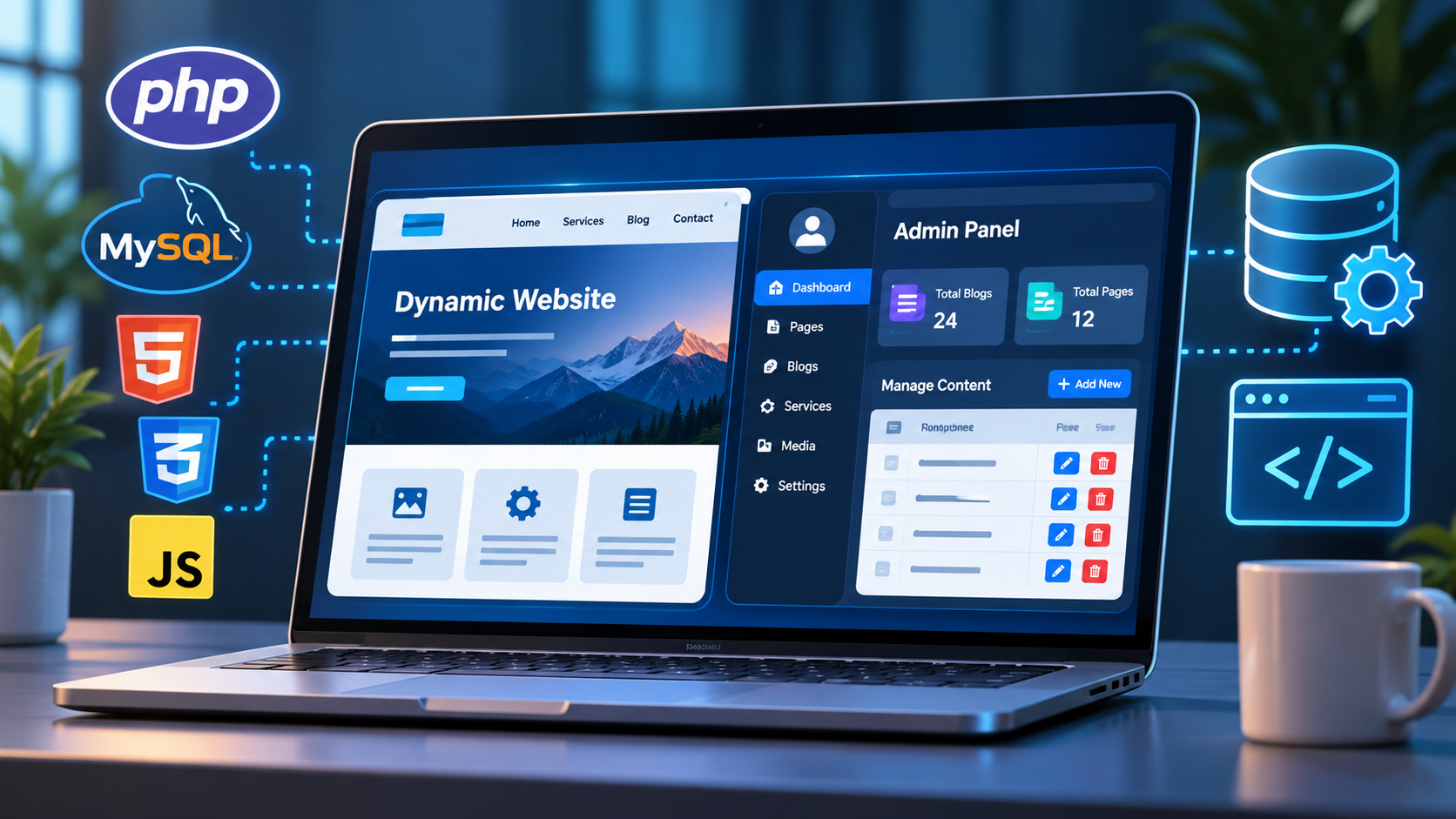
“A dynamic website is a database-driven website that displays and updates content using server-side programming. Unlike static websites, dynamic websites allow administrators to manage information through a user-friendly dashboard. An admin panel acts as the backend management system where authorized users can add, edit, delete, and publish website content. Businesses can use these features to manage blogs, products, services, images, and customer enquiries efficiently. Dynamic website development is especially useful for business websites, educational institutions, e-commerce platforms, and online service providers.”
What Is a Dynamic Website With an Admin Panel
A dynamic website is a database-driven website that displays and updates content using server-side programming. Unlike static websites, dynamic websites allow administrators to manage information through a user-friendly dashboard. An admin panel acts as the backend management system where authorized users can add, edit, delete, and publish website content. Businesses can use these features to manage blogs, products, services, images, and customer enquiries efficiently. Dynamic website development is especially useful for business websites, educational institutions, e-commerce platforms, and online service providers.
Choose the Best Technologies for Dynamic Website Development
Selecting the right technologies is an important step when creating a dynamic website with an admin panel. PHP and MySQL are widely used for building database-driven websites because they support server-side processing, data management, and custom functionality. HTML provides the website structure, CSS handles responsive design, and JavaScript adds interactive features. PHP processes backend operations, while MySQL stores website content and administrator information. Developers can also use Bootstrap to create mobile-friendly layouts and professional admin dashboard interfaces. Choosing compatible technologies helps developers build scalable, maintainable, and efficient web applications.
Create and Connect a MySQL Database With PHP
Database integration is one of the most important parts of dynamic website development. A MySQL database stores information such as blog posts, services, product details, user accounts, and website settings. Start by creating a database using phpMyAdmin or another MySQL management tool. Next, create the required tables and configure the PHP database connection using PDO. Use prepared statements to protect database queries against SQL injection. Once connected, PHP can retrieve website information from the database and display it dynamically on the frontend. This allows administrators to update website content without manually editing HTML pages.
How to Build a Secure Admin Login and Dashboard
A secure admin login system ensures that only authorized users can access website management features. Developers can create a login form using HTML and CSS, while PHP handles authentication and session management. Store passwords using secure hashing methods such as PHP's password_hash() and verify them with password_verify(). After successful authentication, administrators can access the dashboard to manage website content. A professional admin panel should include a responsive sidebar, dashboard statistics, content management options, user permissions, and logout functionality. Implementing CSRF protection, session security, and role-based access control improves the overall security of the website.
Add CRUD Operations for Dynamic Content Management
CRUD operations are essential for creating a fully functional admin panel. CRUD stands for Create, Read, Update, and Delete, which are the four basic operations used to manage database information. With CRUD functionality, administrators can add new blog posts, update service descriptions, upload images, edit product details, and remove outdated content. PHP processes these operations and stores the changes in MySQL. For example, when an administrator adds a new blog post through the dashboard, the system saves its title, description, image, and publication status. The frontend website can then automatically display the published article. This functionality makes content management faster and more convenient for businesses.
Connect the Admin Panel to a Responsive Frontend Website
Connecting the admin panel with the frontend allows website visitors to see updated information automatically. The frontend can be developed using HTML, CSS, JavaScript, and Bootstrap to ensure compatibility across mobile phones, tablets, and desktop devices. PHP retrieves published content from the MySQL database and displays it in the appropriate website sections. For example, updates made to banners, services, blogs, or product listings through the admin dashboard can appear on the public website without changing its source code. Developers should also use reusable components, optimized images, responsive layouts, and efficient database queries to improve website performance and user experience.
Optimize Your Dynamic Website for SEO, Speed, and Security
After completing dynamic website development, optimization is essential for improving search engine visibility, website performance, and user security. An SEO-friendly dynamic website should include clean URLs, relevant keywords, optimized meta titles, meta descriptions, and proper heading structures. Developers should create XML sitemaps, implement canonical URLs where appropriate, optimize images, and improve Core Web Vitals. Website security can be strengthened through HTTPS, secure sessions, prepared SQL statements, input validation, and appropriate access permissions. Regular maintenance, database backups, and performance monitoring also help maintain website reliability. These practices support better user experience and make the website easier for search engines to crawl and index.
Conclusion
Creating a dynamic website with an admin panel using PHP and MySQL is an effective way to develop a flexible, secure, and easily manageable business website. By integrating database connectivity, admin authentication, CRUD operations, responsive frontend design, and SEO optimization, developers can build professional websites that support ongoing business needs. Seyfert Infotech, a website development company in Puducherry, provides custom dynamic website development, PHP and MySQL solutions, responsive web design, and professional admin panel development services. Businesses looking for scalable, SEO-friendly websites can benefit from customized web development solutions that simplify content management and improve their online presence.