
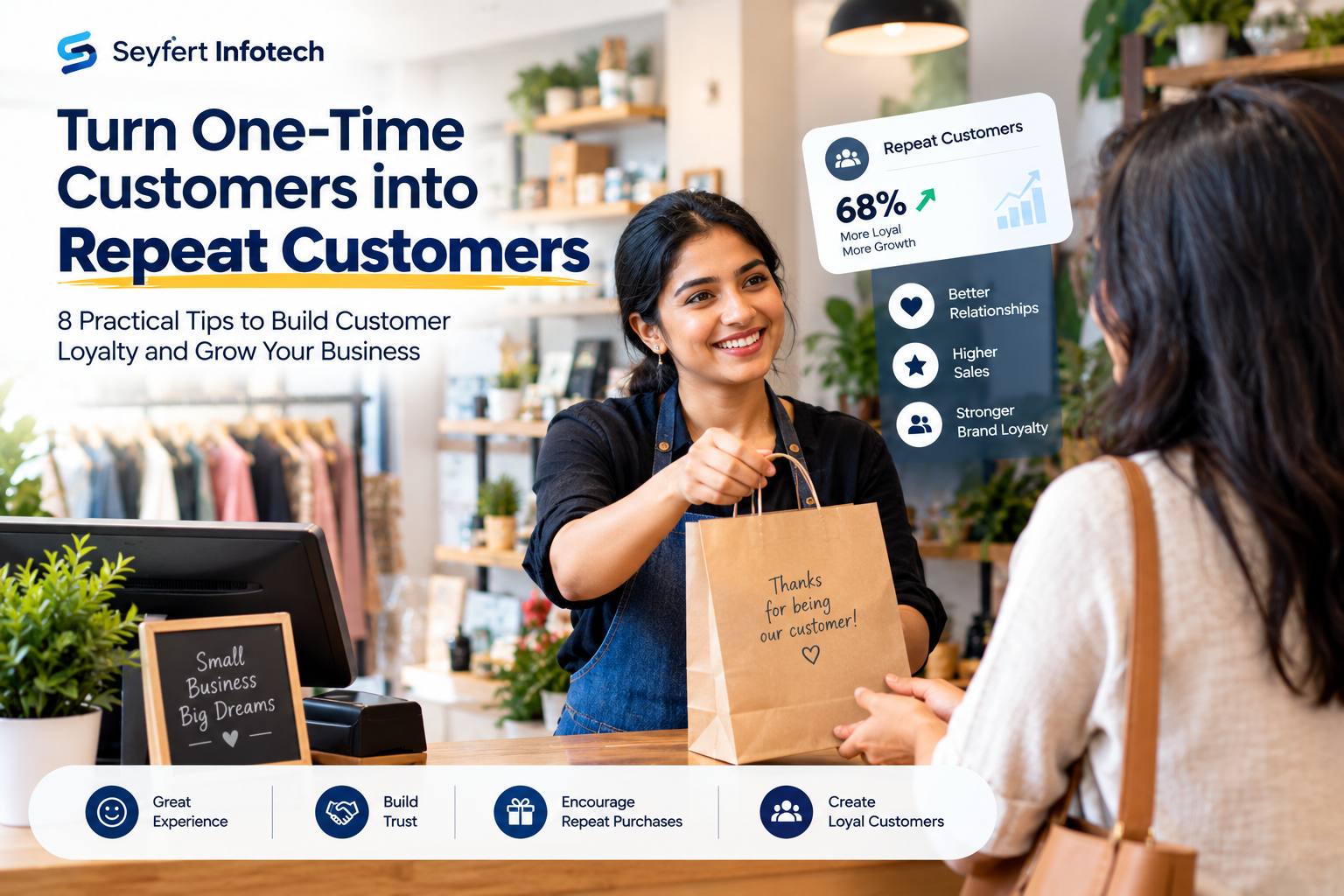
“Imagine a customer visits your shop, purchases a product, and leaves happily. That's a successful sale. But what happens next? Will that customer remember your business and return when they need something again? Or will they choose another business the next time? Getting new customers is important, but building relationships with existing customers is equally valuable. A positive experience can encourage customers to return, recommend your business, and gradually become loyal customers. The good news is that you don't always need expensive marketing campaigns to achieve this. Small improvements in customer service, communication, and follow-up can make a meaningful difference. Here are eight practical tips to turn one-time customers into repeat customers.”
Imagine a customer visits your shop, purchases a product, and leaves happily. That's a successful sale. But what happens next? Will that customer remember your business and return when they need something again? Or will they choose another business the next time? Getting new customers is important, but building relationships with existing customers is equally valuable. A positive experience can encourage customers to return, recommend your business, and gradually become loyal customers. The good news is that you don't always need expensive marketing campaigns to achieve this. Small improvements in customer service, communication, and follow-up can make a meaningful difference. Here are eight practical tips to turn one-time customers into repeat customers.
Make the First Customer Experience Memorable
A customer's relationship with your business begins with their first interaction. Whether they discover your business through Google, visit your store, contact you on WhatsApp, or place an order through your website, that first experience influences whether they want to return. Focus on: Greeting customers politely and understanding their needs. Providing clear product or service information. Making the purchasing process simple. Delivering what you promise. Ensuring customers know how to contact you after a purchase. Practical tip: Look at your business from a customer's perspective. Identify any confusing steps, unnecessary delays, or communication gaps and improve them.
Follow Up After Every Important Purchase
Many businesses focus heavily on getting the sale but forget about the customer once the payment is completed. A simple follow-up message can help maintain the relationship. For example, after a purchase, you could send a message asking whether the customer received the product or was satisfied with the service. For service-based businesses, a follow-up can also help confirm whether the work was completed successfully. A good follow-up should: Thank the customer for choosing your business. Check whether they are satisfied. Offer help if they face any issues. Avoid sending unnecessary promotional messages. Practical tip: Create a simple follow-up schedule based on your product or service. A clothing purchase, a restaurant visit, and a website development project may all require different follow-up timings.
Remember Your Customers and Their Preferences
Customers appreciate businesses that understand their requirements. For example, a boutique that remembers a customer's preferred clothing style or a salon that keeps track of previous service preferences can provide a more personal experience. You don't need a complicated system to start. Maintain useful customer information such as: Customer name and contact details. Previous purchases or services. Product preferences. Important service dates. Previous enquiries and follow-up status. Always collect and use customer information responsibly, with appropriate consent and access controls. Practical tip: Use a simple customer management system or CRM instead of depending entirely on scattered notebooks and spreadsheets.
Offer Meaningful Rewards for Returning Customers
People appreciate being valued. A customer loyalty programme can give people a reason to choose your business again instead of trying a competitor. Some simple ideas include: Points for eligible purchases. Discounts after a certain number of visits. Special benefits for regular customers. Birthday or anniversary offers. Exclusive deals for returning customers. For example, a café could offer a free drink after a specified number of qualifying purchases. However, rewards should be easy to understand and genuinely useful. Complicated conditions can discourage participation. Practical tip: Start with one simple loyalty benefit and measure whether customers actually use it.
Remember: Customer loyalty is not built through discounts alone. Consistent quality, helpful service, convenience, and trust are equally important reasons customers return.
Make It Easy for Customers to Buy Again
Even satisfied customers may not return if the purchasing process is complicated. Think about how customers can place another order or book your service without repeating unnecessary steps. For example: Display your latest products in an easy-to-browse digital catalogue. Provide a clear WhatsApp contact option. Make repeat bookings simple. Allow customers to find important business information quickly. Offer convenient online ordering where appropriate. If customers have to search through old messages or contact multiple people just to place another order, they may choose a more convenient alternative. Practical tip: Review your repeat-purchase journey. Can an existing customer find a product, check its details, and contact your business without confusion?
Share Useful Updates Instead of Sending Random Promotions
Regular communication helps customers remember your business, but sending too many promotional messages can have the opposite effect. Instead of repeatedly sharing discounts, send information that customers may actually find useful. Examples include: New product arrivals. Seasonal collections. Service updates. Helpful product-care tips. Relevant offers and announcements. Useful reminders for recurring services. Choose communication channels that suit your customers, such as email, WhatsApp, or social media. Make sure promotional messages are sent only with appropriate permission and that customers can opt out easily. Practical tip: Focus on relevant communication rather than message frequency. One useful update can be more valuable than several unrelated promotions.
Ask for Feedback and Act on It
Sometimes customers don't return because of a problem that the business never discovers. It could be delayed delivery, unclear pricing, poor communication, or an issue with the product or service. Asking for feedback gives customers an opportunity to share their experience. You can collect feedback through: Short online feedback forms. Post-purchase messages. Website review sections. Google Business Profile reviews. Direct conversations with customers. But collecting feedback is only the first step. You should also review common complaints and take action to improve your service. If a customer reports a problem, respond politely and try to resolve it. Practical tip: Look for repeated feedback patterns. If several customers mention the same issue, it may be time to improve that part of your business process.
Use Digital Tools to Maintain Customer Relationships
As your business grows, remembering every customer, tracking purchases, and managing follow-ups manually can become difficult. This is where digital tools can make a difference. Depending on your business requirements, you can use: CRM systems: Organize customer information and track interactions. Email marketing tools: Send relevant updates to subscribed customers. WhatsApp Business: Manage customer conversations and provide quick responses. Online booking systems: Make repeat appointments easier. Custom business applications: Connect customer records, orders, enquiries, and follow-up activities in one workflow. You don't need to implement everything at once. Start with the process that takes the most time or creates the most confusion. Practical tip: Choose tools that solve an actual business problem instead of adding technology just because it is available.
How Seyfert Infotech Can Help Your Business Build Better Customer Relationships
Maintaining customer relationships becomes easier when your business has the right digital systems. At Seyfert Infotech, we help businesses explore digital solutions that simplify customer interactions and daily operations. Depending on your requirements, these solutions can include: Business websites with clear product and service information. Digital catalogues that make products easier to explore. Custom CRM and customer management systems. Enquiry and follow-up management solutions. Online booking and ordering systems. Business dashboards to organize and monitor important information. The objective is simple: reduce unnecessary manual work and make it easier for businesses to serve their customers. Whether you run a retail store, boutique, restaurant, or service-based business, the right digital solution can support a more organized customer experience.
Why are repeat customers important for a business?
Repeat customers can provide ongoing sales opportunities, reduce the need to depend entirely on acquiring new customers, and help build trust through long-term relationships.
How can a small business encourage customers to return?
Small businesses can improve customer service, follow up after purchases, offer useful loyalty benefits, communicate relevant updates, and make repeat purchases convenient.
How can businesses keep track of returning customers?
Businesses can use spreadsheets, CRM systems, or custom customer management applications to organize purchase history, customer details, interactions, and follow-up activities.
Can a website help businesses get repeat customers?
Yes. A website can make it easier for customers to browse products, access business information, place repeat orders, book services, and contact the business.
What is the difference between customer retention and customer acquisition?
Customer acquisition focuses on attracting new customers, while customer retention focuses on maintaining relationships with existing customers and encouraging them to continue purchasing.