
“Website loading speed is an important factor in user experience and search engine optimization. Visitors may leave a website when pages take too long to load, resulting in lost opportunities for engagement and conversions. Large images, unnecessary JavaScript, excessive animations, and inefficient coding can slow down website performance. Google also considers Core Web Vitals within its ranking systems. Optimizing images, reducing unnecessary scripts, enabling caching, and choosing reliable hosting can improve website speed and create a smoother browsing experience.”
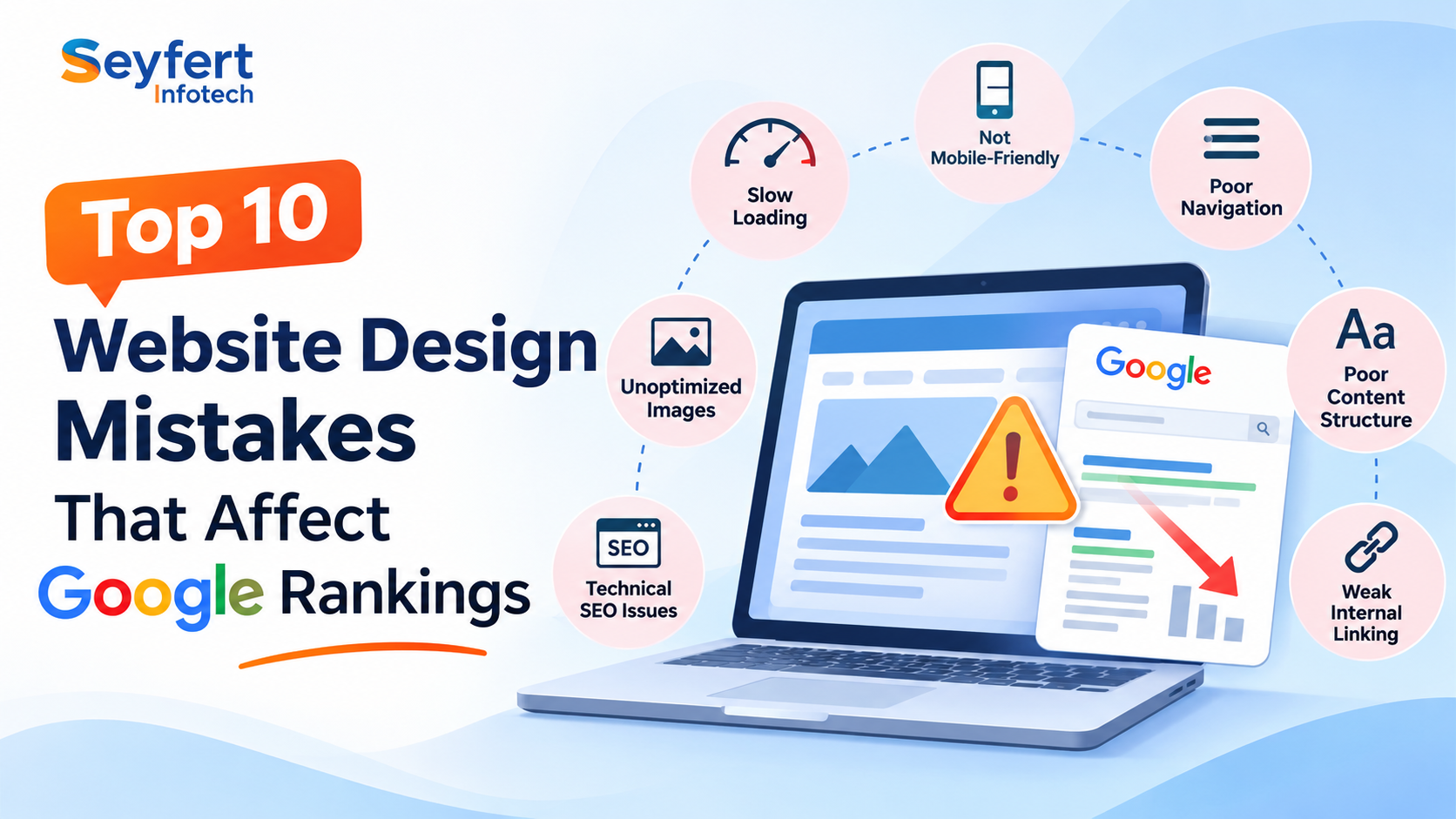
Slow Website Loading Speed
Website loading speed is an important factor in user experience and search engine optimization. Visitors may leave a website when pages take too long to load, resulting in lost opportunities for engagement and conversions. Large images, unnecessary JavaScript, excessive animations, and inefficient coding can slow down website performance. Google also considers Core Web Vitals within its ranking systems. Optimizing images, reducing unnecessary scripts, enabling caching, and choosing reliable hosting can improve website speed and create a smoother browsing experience.
Poor Mobile Responsive Design
Mobile responsiveness is essential because many users access business websites through smartphones and tablets. A website that does not adapt properly to different screen sizes can make navigation and content accessibility difficult. Google uses mobile-first indexing, meaning the mobile version of website content is primarily used for indexing and ranking. Missing content or poor mobile accessibility can therefore create SEO challenges. Businesses should implement responsive layouts, readable typography, optimized images, and mobile-friendly navigation to ensure a consistent experience across devices.
Complicated Website Navigation Structure
Clear website navigation helps visitors find important information quickly while allowing search engines to discover and understand website pages. Complicated menus, broken links, confusing page structures, and excessive dropdown options can make websites difficult to explore. Important service pages may also become harder for search engines to discover. A simple navigation menu, organized page hierarchy, descriptive links, and properly structured internal linking can improve usability and support SEO performance.
Missing SEO-Friendly Content and Heading Structure
Website content should be organized with clear headings, relevant information, and easy-to-read paragraphs. Poor content structure can make it difficult for visitors to understand the purpose of a page. Missing heading tags, unclear page titles, repetitive content, and unnecessary keyword stuffing can reduce content quality and make page topics less clear to search engines. Using descriptive H1, H2, and H3 headings, naturally placed keywords, helpful content, and relevant meta titles can strengthen a website's SEO foundation
Using Large and Unoptimized Images
Images are important for creating visually attractive websites, but oversized image files can significantly increase loading times and affect website performance. Using images without compression, appropriate dimensions, or descriptive alternative text can create unnecessary performance and accessibility problems. Businesses should use modern formats such as WebP, compress image files, specify image dimensions, and include meaningful alt text. Proper image optimization supports faster loading and a better overall user experience.
Ignoring Technical SEO and Internal Linking
Technical SEO helps search engines crawl, index, and understand website content effectively. Even a visually impressive website can experience search visibility problems when important technical elements are incorrectly configured. Broken links, accidental noindex tags, incorrect canonical URLs, blocked pages, and poorly connected content can create indexing and navigation challenges. Implementing XML sitemaps, proper redirects, descriptive URLs, crawlable internal links, and Google Search Console monitoring can help maintain a technically reliable website.
Conclusion
Avoiding common website design mistakes is essential for building a fast, responsive, and SEO-friendly website. Factors such as loading speed, mobile responsiveness, structured content, technical SEO, and user experience all contribute to overall website quality and can influence search performance. At Seyfert Infotech, we develop modern, responsive, and professionally designed websites that combine attractive layouts with SEO-friendly development practices. Our goal is to help businesses improve their digital presence, deliver better user experiences, and create opportunities for long-term online growth.