
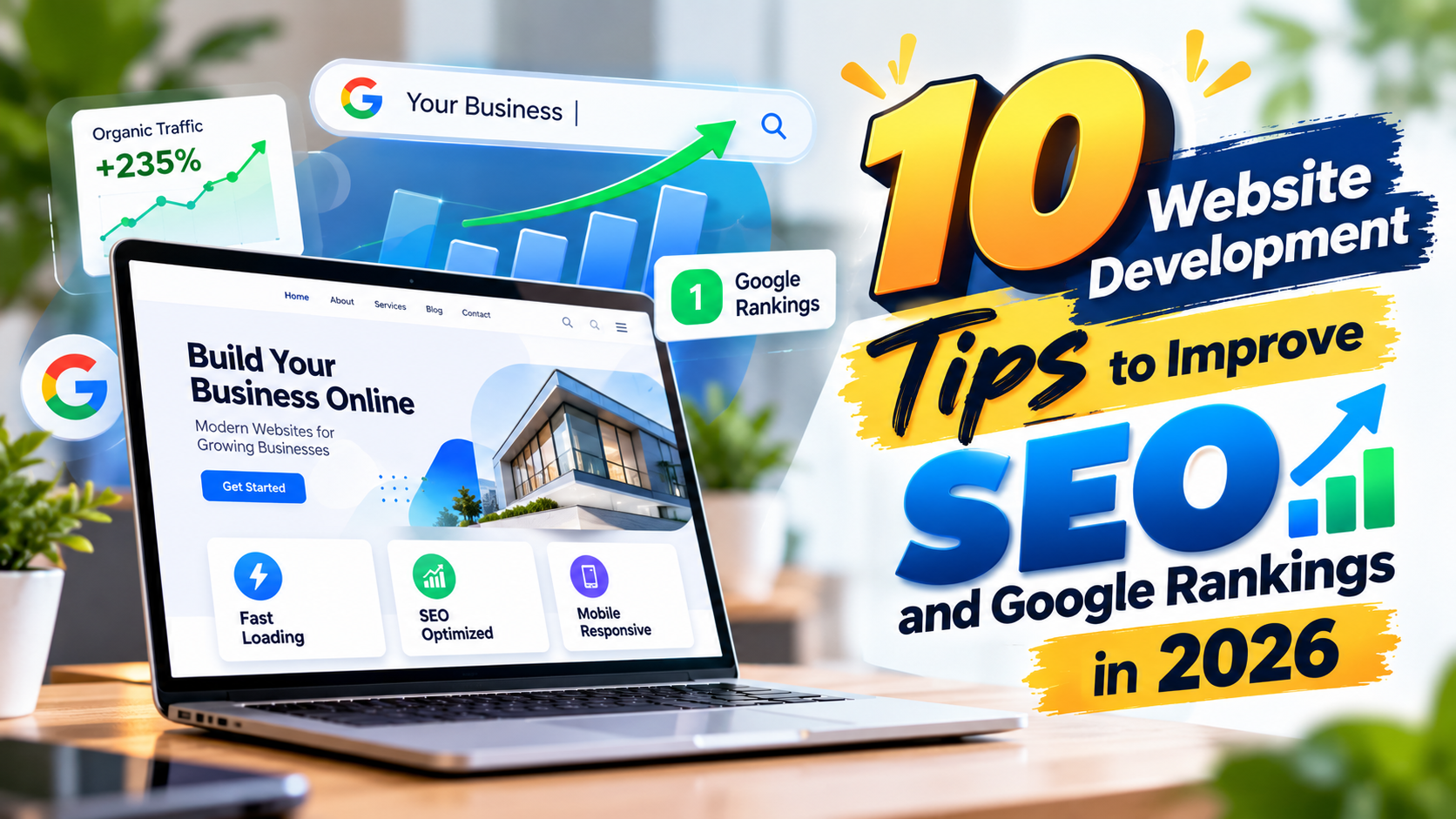
“SEO is not limited to keywords and blog content. The way a website is designed and developed can affect how easily users navigate the site and how effectively search engines discover, understand, and process its pages.”
Why Website Development Matters for SEO in 2026
SEO is not limited to keywords and blog content. The way a website is designed and developed can affect how easily users navigate the site and how effectively search engines discover, understand, and process its pages.
A technically strong website should combine fast performance, mobile usability, secure connections, clear architecture, useful content, and accessible navigation. Google also recommends looking at page experience as a whole rather than focusing on only one performance factor.
1. Build a Mobile-First Responsive Website
Modern websites need to provide a consistent experience across smartphones, tablets, laptops, and desktop computers. Responsive development allows layouts, images, navigation, buttons, typography, and forms to adapt to different screen sizes.
Mobile usability should be considered from the beginning of development instead of being added after the desktop version is completed. A website that is easy to browse and interact with on smaller screens can provide a better experience for visitors arriving through mobile search.
2. Improve Website Speed and Core Web Vitals
Website speed is an important part of creating a good page experience. Large images, unnecessary JavaScript, excessive CSS, slow hosting, third-party scripts, and inefficient code can increase loading time and affect how visitors interact with a page.
Developers should optimize images, reduce unnecessary resources, improve server response time, use appropriate caching, and monitor Core Web Vitals. Google recommends good Core Web Vitals as part of providing a strong overall page experience, although achieving perfect scores alone does not guarantee top rankings.
3. Create a Clear SEO-Friendly Website Structure
Website architecture should make it easy for users and search engines to understand how pages are connected. Important service pages, product pages, categories, blogs, location pages, and contact information should be organized through a logical navigation structure.
A clear hierarchy also makes future website expansion easier. Developers can create relevant internal links between related pages while ensuring that important content is not hidden behind unnecessarily complicated navigation or URL structures.
4. Use Clean and Descriptive URLs
A descriptive URL can communicate the subject of a page before a visitor opens it. URLs such as /services/web-development or /blog/seo-strategy-2026 are generally easier to understand than long URLs containing unnecessary parameters and unrelated numbers.
Developers should establish a consistent URL structure before creating large amounts of content. When existing URLs need to change, appropriate redirects should be implemented so users and search engines can reach the preferred page without creating unnecessary broken links.
5. Develop SEO-Friendly Page Templates
SEO should be considered when creating the underlying templates used across a website. Page templates should support proper HTML structure, descriptive titles, heading hierarchy, crawlable content, optimized images, canonical URLs, and other technical SEO requirements.
A reusable template can also make SEO management more consistent across multiple pages. Developers should avoid creating templates that automatically generate unnecessary duplicate content, empty sections, repetitive metadata, or large amounts of low-value pages.
6. Create Helpful and Search-Intent Focused Content
Website development and content strategy should work together. Important pages should provide useful information that matches what visitors are actually looking for, whether they want to learn about a service, compare options, find pricing information, or contact a business.
Google's current guidance emphasizes helpful, reliable, people-first content rather than content created primarily to manipulate rankings. Original information, useful analysis, comprehensive coverage, and genuine expertise can make website content more valuable to users.
7. Strengthen Internal Linking Across the Website
Internal linking connects related pages and helps visitors discover more information. A service page can link to relevant blog articles, FAQs, case studies, guides, and related services, creating a clear path through the website.
Internal links can also help search engines understand relationships between pages. Developers and content teams should use descriptive anchor text and create links where they genuinely help users instead of adding links simply to increase their number.
8. Optimize Your Website for AEO and GEO
Search experiences are changing as users increasingly interact with AI-powered answers. Websites can prepare by creating clear answers to customer questions, detailed service information, useful FAQs, structured content, and authoritative resources around important topics.
AEO focuses on answer-oriented content, while GEO is commonly used for optimization related to generative search experiences. These approaches should complement traditional SEO rather than replace it, because Google's AI search experiences continue to rely on core Search systems and established SEO fundamentals.
9. Make Your Website Secure and Technically Reliable
Website security is an important part of professional development. HTTPS, secure authentication, controlled administrator access, software updates, backups, and appropriate server configuration can help protect websites and the information they handle.
Technical reliability also includes handling broken pages, incorrect redirects, crawl issues, duplicate URLs, and server errors. Regular technical audits can identify problems before they affect a larger number of users or website pages.
10. Optimize Images and Other Website Resources
Images can significantly affect website performance when they are larger than necessary. Developers should resize images according to their display requirements, compress them appropriately, and use suitable modern formats where supported.
Other resources such as fonts, videos, analytics scripts, chat widgets, advertising scripts, and external libraries should also be evaluated. Loading only the resources required for a page can help reduce unnecessary browser work and improve the overall user experience.
Improve Navigation for Better User Experience
A website's navigation should help visitors reach important information quickly. Clear menus, descriptive labels, logical categories, accessible buttons, and responsive mobile navigation can reduce unnecessary steps between a visitor and the information they need.
Developers should also test navigation using different devices and interaction methods. Keyboard accessibility, touch-friendly controls, visible focus states, and properly functioning dropdown menus can make navigation easier for a wider range of users.
Use Structured Data Correctly
Structured data can provide search engines with additional information about eligible website content. Depending on the type of website, developers may use appropriate structured data for supported content such as products, articles, organizations, breadcrumbs, and other relevant entities.
Structured data should accurately represent information that is visible and relevant on the page. Google uses structured data to understand webpage content and potentially make eligible pages suitable for richer search appearances.
Optimize Website Performance Before Launch
Performance testing should happen throughout development rather than only after a website goes live. Developers should check page loading, image sizes, JavaScript execution, CSS resources, fonts, server response times, forms, navigation, and responsive layouts.
Testing across different devices and browsers can reveal problems that may not appear during development on a single computer. Fixing performance and usability issues before launch can create a stronger foundation for both visitors and search visibility.
Monitor SEO Performance After Website Launch
SEO-friendly development should continue after deployment. Businesses should monitor organic traffic, search queries, impressions, clicks, indexed pages, landing-page performance, and conversions to understand how the website is performing.
Google Search Console provides useful information for understanding how Google discovers and indexes websites and how pages perform in Search. Regular monitoring allows developers and SEO teams to identify technical problems and improvement opportunities.
Avoid Common Website Development SEO Mistakes
Common mistakes include oversized images, slow hosting, excessive JavaScript, poor mobile layouts, unclear navigation, duplicate URLs, missing redirects, inaccessible content, broken internal links, and pages that cannot be properly crawled or indexed.
Another common mistake is focusing entirely on technical SEO while ignoring content quality. A successful website needs both a strong technical foundation and useful information that satisfies the needs of its target audience.
Build Websites for Long-Term SEO Growth
The best SEO strategy begins during website development rather than after the website is launched. Responsive design, performance optimization, clean architecture, technical SEO, useful content, internal linking, security, and analytics should work together as one development strategy.
In 2026, businesses should also prepare for evolving search experiences through AEO, GEO, and AI-ready content. However, the fundamentals remain important: Google continues to emphasize helpful content, technical accessibility, and a strong overall page experience.
Build Better Websites for People First — Then Optimize Them for Search.
SEO-friendly website development is about creating a technically strong and genuinely useful digital experience. When developers combine speed, mobile usability, clean architecture, helpful content, accessibility, security, and modern search optimization, the website becomes a stronger foundation for sustainable organic growth.
Frequently Asked Questions About SEO-Friendly Website Development
How does website development affect SEO?
Website development affects SEO through factors such as site architecture, crawlability, page speed, mobile usability, URL structure, internal linking, accessibility, security, and how effectively search engines can process website content.
What is the most important website development tip for SEO?
There is no single development change that guarantees higher rankings. A strong approach combines mobile responsiveness, fast performance, clean architecture, technical SEO, useful content, internal linking, security, and continuous performance monitoring.
Does website speed improve Google rankings?
Website speed contributes to page experience and can affect how visitors interact with a website. Google recommends good Core Web Vitals and an overall good page experience, but performance scores alone do not guarantee top search rankings.
Should website development include AEO and GEO?
AEO and GEO can be included as part of a modern search strategy. They should complement traditional SEO by encouraging clear answers, useful content, strong information architecture, and authoritative resources rather than replacing technical SEO fundamentals.
How often should a website be optimized for SEO?
SEO should be treated as an ongoing process. Businesses should regularly review technical performance, content quality, mobile usability, search visibility, broken links, security, and conversions, then make meaningful improvements based on actual performance data.