
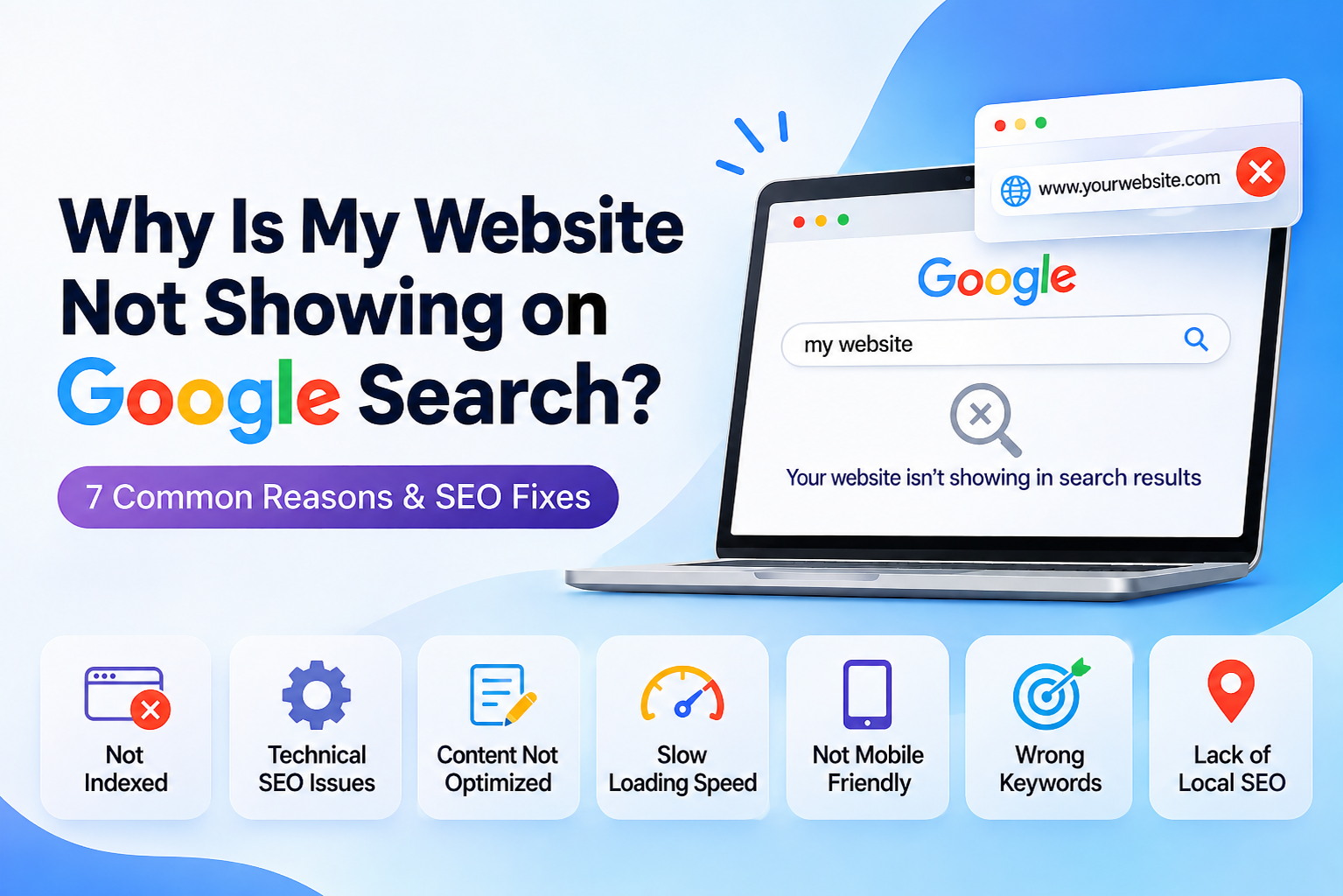
“Having a website is important for every business, but simply creating a website does not guarantee visibility on Google. Many business owners face the problem of their website not appearing in Google Search results, even after launching it successfully. This can happen due to technical SEO problems, indexing issues, poor content optimization, or website performance. Understanding these issues and fixing them can improve your website's visibility, attract organic traffic, and help your business reach potential customers.”
Why Is My Website Not Showing on Google Search?
Having a website is important for every business, but simply creating a website does not guarantee visibility on Google. Many business owners face the problem of their website not appearing in Google Search results, even after launching it successfully. This can happen due to technical SEO problems, indexing issues, poor content optimization, or website performance. Understanding these issues and fixing them can improve your website's visibility, attract organic traffic, and help your business reach potential customers.
Your Website Has Technical SEO Issues
Technical SEO plays an important role in making your website accessible to search engines. Problems with website structure, broken links, incorrect redirects, robots.txt files, and XML sitemaps can affect how Google discovers and processes your pages. For example, if your website contains a noindex directive, Google may exclude that page from search results. Similarly, incorrect robots.txt rules can prevent search engines from crawling important sections of your website. Regular technical SEO audits help identify these problems. Fixing crawl errors, submitting an XML sitemap, and maintaining a clear website structure can make your pages easier for Google to discover and understand.
Your Website Content Is Not SEO Optimized
Website content helps Google understand what your business offers and which search queries your pages may answer. If your website contains limited information, unclear headings, or irrelevant keywords, it may struggle to rank for competitive searches. Every important page should have a descriptive SEO title, relevant headings, helpful content, and a clear explanation of its services or products. Content should answer real customer questions rather than simply repeat keywords. For example, a website development company can publish informative articles about website design, SEO, website maintenance, and digital marketing. Useful, original content improves the experience for visitors and can strengthen organic search visibility.
Your Website Loading Speed Is Too Slow
Website loading speed directly affects user experience. Visitors may leave a website if its pages take too long to load, especially when browsing on mobile devices. Large images, unnecessary JavaScript, excessive plugins, and poorly configured hosting can slow down website performance. Slow loading may also make it harder for visitors to navigate your website and complete important actions. Use tools such as Google PageSpeed Insights to evaluate website performance. Compressing images, optimizing code, enabling caching, and choosing reliable hosting can improve loading speed and support a better user experience. Page experience is one of several considerations in Google's ranking systems, not a guarantee of higher rankings.
Your Website Is Not Mobile Friendly
Many users access websites through smartphones, making mobile-friendly website design essential for modern businesses. Google primarily uses the mobile version of a website's content for indexing. If your website has small text, overlapping elements, difficult navigation, or layouts that do not adjust to different screen sizes, visitors may have a poor browsing experience. Responsive website development helps ensure your content works across mobile phones, tablets, laptops, and desktop computers. A mobile-friendly website should offer readable text, accessible buttons, fast loading, and simple navigation.
Your Website Is Targeting the Wrong Keywords
Keywords help connect your website content with what users search for on Google. If your website targets keywords that are irrelevant, overly broad, or poorly matched to customer intent, it may fail to attract the right audience. For example, a web development company located in Puducherry may benefit from targeting relevant local queries such as "website development company in Pondicherry" or "web design services in Puducherry." Keyword research helps identify the search terms potential customers use. Incorporating relevant keywords naturally into page titles, headings, URLs, and content can improve topical relevance without excessive keyword repetition.
Your Website Lacks Local SEO Optimization
Local SEO is particularly important for businesses serving customers in specific cities or regions. Without proper local SEO, your business may struggle to appear in relevant location-based search results. Creating and optimizing a Google Business Profile can help eligible businesses become more visible on Google Maps and in local search. Accurate business information, relevant categories, customer reviews, and updated business details support local visibility. Businesses should also maintain consistent contact information across their website and relevant business directories. Creating useful location-specific content can help customers understand the services available in their area.
Conclusion
If your website is not showing on Google Search, the problem may involve indexing, technical SEO, content quality, website speed, mobile responsiveness, keyword targeting, or local SEO. Identifying and resolving these issues is an important step toward improving your website's search visibility. Consistent SEO improvements, valuable content, and a user-friendly website can help attract relevant visitors and generate more business opportunities over time. At Seyfert Infotech, we provide professional website development, SEO services, and digital marketing solutions to help businesses strengthen their online presence.