
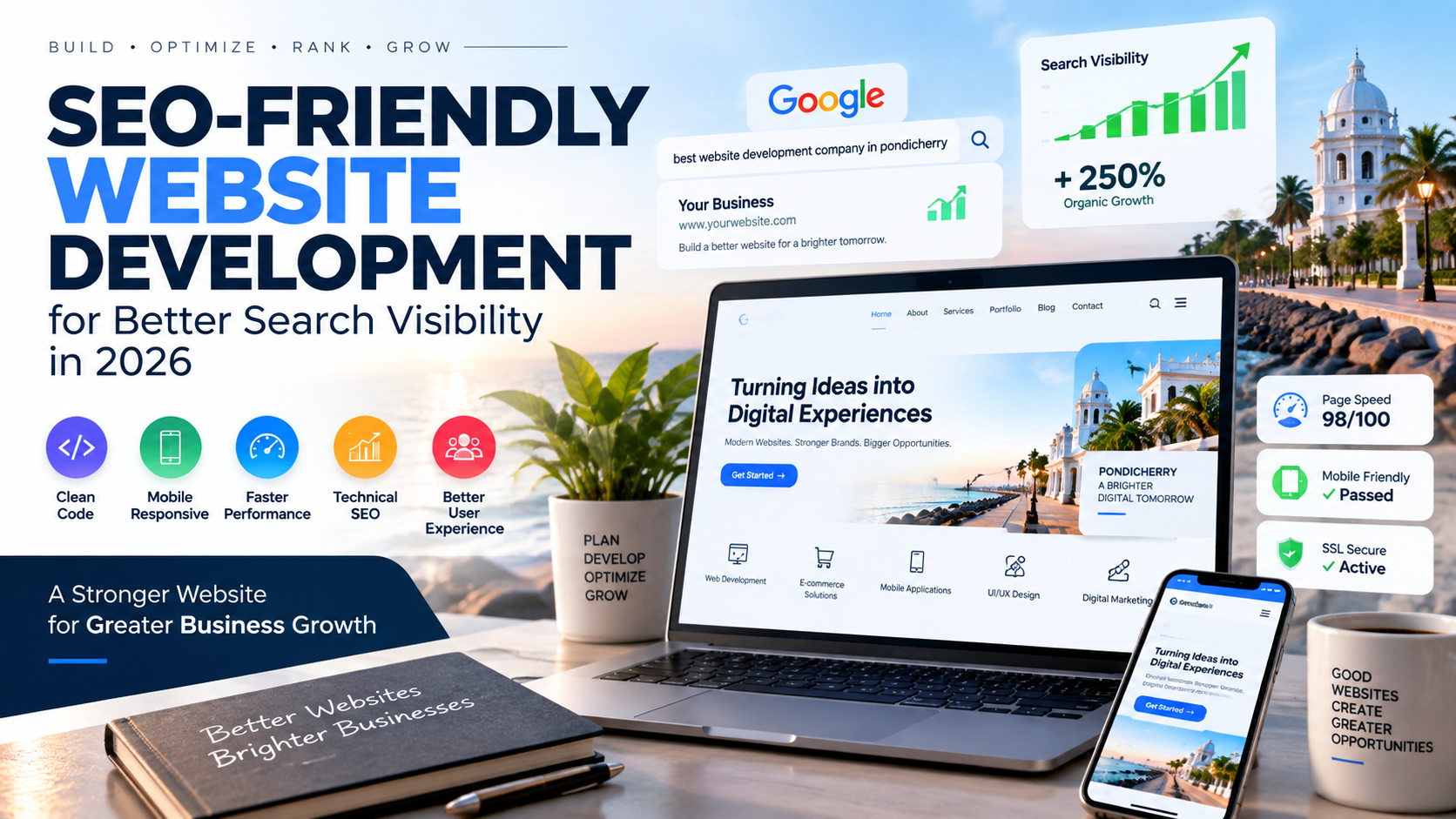
“Search engine optimization is often associated with keywords, content, and backlinks. However, a strong SEO strategy begins much earlier — during website development. A website that is slow, difficult to navigate, poorly structured, or not mobile-friendly can struggle to perform well in search results even when the content is useful. SEO-friendly website development focuses on creating a strong technical foundation that helps search engines understand the website while also providing users with a fast, clear, and reliable browsing experience.”
Search engine optimization is often associated with keywords, content, and backlinks. However, a strong SEO strategy begins much earlier — during website development. A website that is slow, difficult to navigate, poorly structured, or not mobile-friendly can struggle to perform well in search results even when the content is useful. SEO-friendly website development focuses on creating a strong technical foundation that helps search engines understand the website while also providing users with a fast, clear, and reliable browsing experience.
SEO Starts with the Way a Website Is Built
Clean Website Structure Improves Search Understanding
Search engines need to understand how different pages of a website are connected. A clear website structure helps both users and search engines move through the site easily. Important pages should be organised logically, URLs should be simple and meaningful, and navigation should help visitors reach useful information without unnecessary steps. For example, a service page URL such as: /web-development-services is easier to understand than a URL containing random numbers or unclear parameters. A clean structure also makes it easier to expand the website as the business grows.
Mobile-Friendly Development Is Essential
Good SEO is not added after development. It should be considered from the first stage of website planning.
A large percentage of website visitors access the internet through mobile devices. A website that works well on desktop but performs poorly on mobile can create a frustrating user experience. Responsive development ensures that layouts, images, buttons, menus, forms, and text adjust properly across different screen sizes. Mobile-friendly websites are easier to use and provide a stronger foundation for search visibility. Developers should test websites across smartphones, tablets, laptops, and larger displays before deployment.
Website Speed Directly Affects User Experience
Users expect websites to load quickly. Large images, unnecessary scripts, poorly written code, and excessive third-party resources can make a website slow. SEO-friendly development focuses on improving performance through techniques such as image compression, lazy loading, browser caching, optimized code, and reduced unnecessary requests. A fast website improves user experience and can help reduce the number of visitors leaving before the page loads.
SEO-Friendly URLs and Page Structure
Every important page should have a clear URL that reflects its content. Simple and descriptive URLs are easier for users to understand and easier for search engines to interpret. Each page should also follow a proper heading structure using one main heading and well-organised subheadings. This creates a clear hierarchy and helps search engines understand the main topic and supporting sections of the page.
Proper Meta Titles and Descriptions
Meta titles and descriptions help explain the purpose of a webpage in search results. A well-written meta title should clearly describe the page and include the primary topic naturally. Meta descriptions should summarise the content and encourage users to visit the page without using misleading or repetitive wording. Every important page should have unique meta information rather than using the same title and description across the entire website.
Image Optimization Supports SEO
Images are an important part of modern websites, but they should be used carefully. Large image files can reduce loading speed, while missing image descriptions can make content less accessible. Developers should use appropriately sized images, modern file formats where suitable, descriptive file names, and meaningful ALT text. ALT text helps search engines understand the purpose of an image and also improves accessibility for users who rely on screen readers.
Technical SEO Begins in Development
Technical SEO includes several elements that developers should consider while building a website. These can include XML sitemaps, robots.txt files, canonical URLs, redirects, HTTPS, clean internal linking, structured data, and proper handling of error pages. When these elements are implemented correctly, search engines can crawl and index the website more efficiently. Ignoring technical SEO until after launch can create unnecessary problems that are harder to fix later.